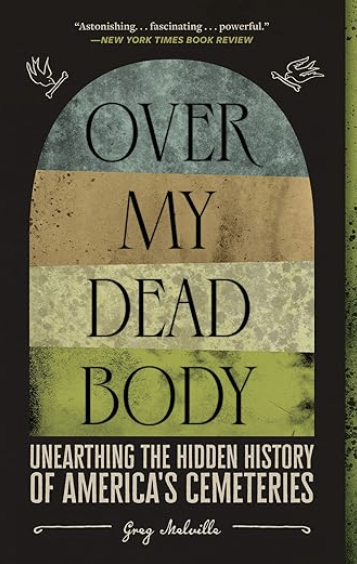
This was one of the first books I ever read about cemeteries and it helped me realize that I wasn’t weird for my love of wandering among the tombstones. One thing I really appreciate about this book is that it does not shy away from discussing America’s ugly past. The book opens in Jamestown, where the first European dead on American soil were buried. The book reveals that those earlier burials reveal evidence of cannibalism and talks about the desecration of Native American dead by pilgrims. Another ugly chapter is that of enslaved people’s cemeteries in the South, where African American bodies were also buried in unmarked graves. Melville contrasts the grand burial of Thomas Jefferson with unmarked graves of the people he enslaved, who were buried in the woods with no records kept to show where they were buried. The bodies came to light only through ground-penetrating radar. Although most Americans are no longer so blatantly racist, Jewish graves in America have long been a target for intolerance. Even today, the Colonial Jewish Burial Ground in Newport Island is locked most of the year so that its graves are not desecrated.
Although Melville does not shy away from our ugly history, he also tells the stories of rural cemeteries in the United States and how they provided city dwellers with a place to not only bury their dead, but also to picnic and walk. One of these rural cemeteries is Green-Wood Cemetery in Brooklyn, which is not only a cemetery and arboretum, but also a sculptural garden full of statues and artistically carved tombstones.