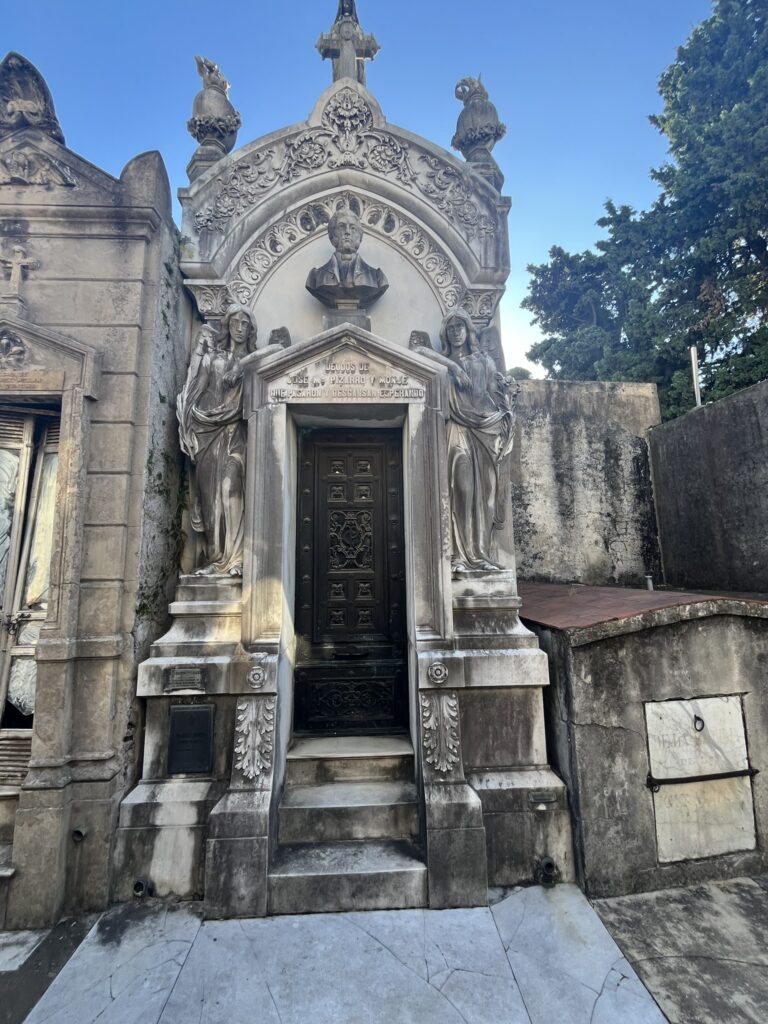
The Basics
Address:
Junín 1760
C1113 Buenos Aires
CABA
Argentina
Website: Recoleta Cemetery Page on the Buenos Aires Tourist Site.
Entrance fee: 1400 pesos or approximately $13,
Hours: 8:00 am to 6:00 PM
My Visit
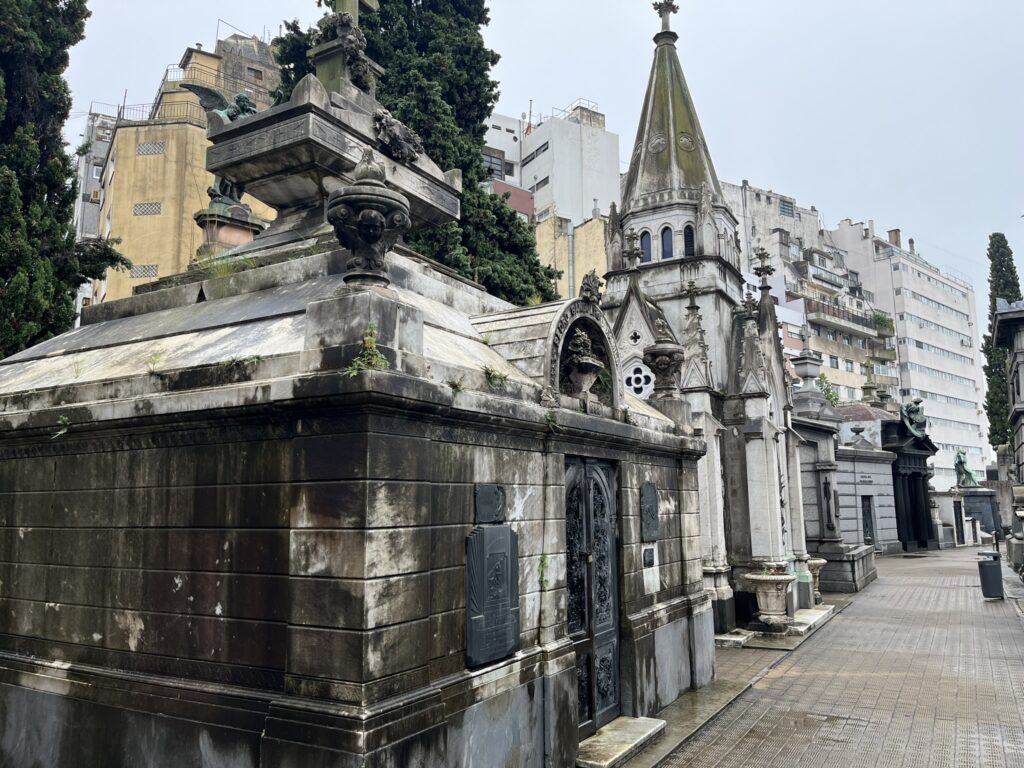
One of the first things I did when I learned that I was going to be in Buenos Aires for a week was to research cemeteries in the city. The one Google kept coming back to was Recoleta. Located in the Recoleta district of the city, the images showed multitudes of above-ground crypts and statuary.
This 5.5-hectare (approximately 13.6 acres) was founded in 1822 on land seized from the Catholic church. It was actually the orchard of the original monastery, and there is still a Catholic church nearby. Recoleta became the place to be buried and the wealthy of Argentina built elaborate tombs on its streets.
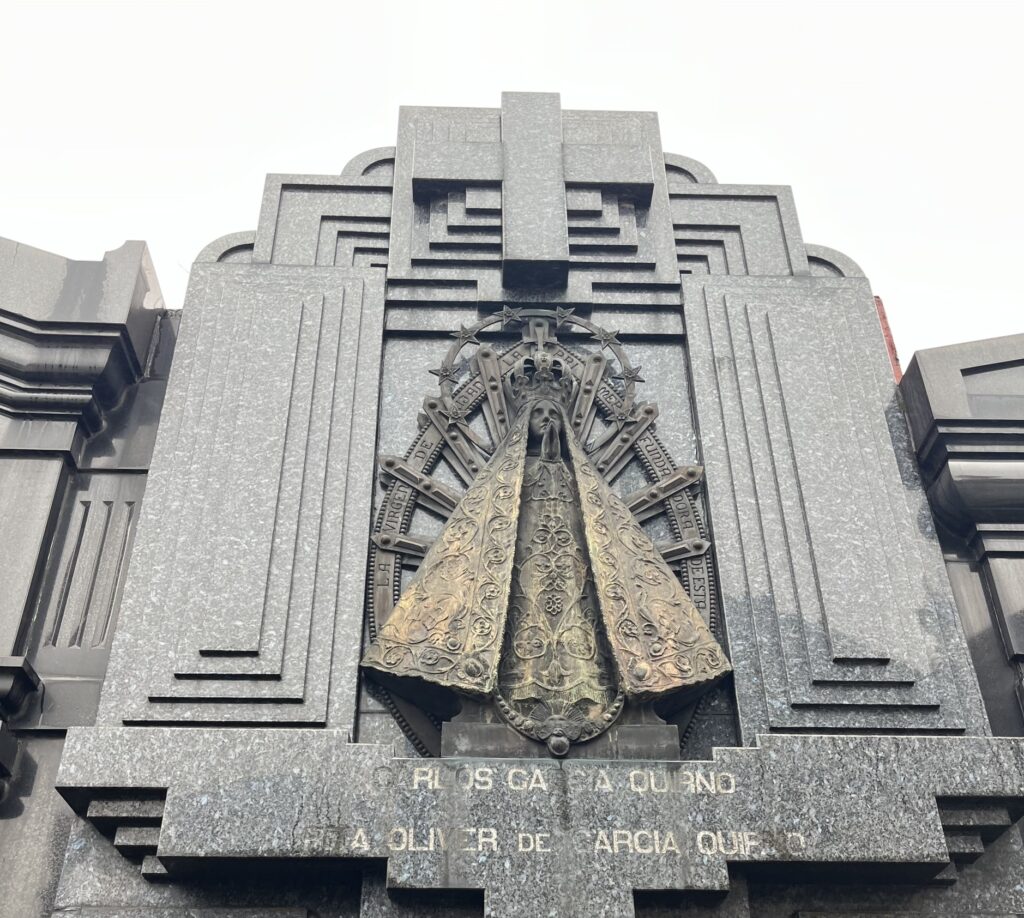
Recoleta was not far from my hotel so I ended up walking, but my path took me by the mall and I could not find the entrance. I ended up walking all the way around the cemetery before finding the entrance. Walking around was an experience in and of itself, as the cemetery’s 14 acres are enclosed behind a stone wall and are not visible from the street. The Recoleta area is interesting in and of itself, as there are shops, restaurants, and the National Museum of Fine Art. Along the wall where the entrance to the cemetery is, the Basilica of Our Lady of the Pillar. I detoured into the church and looked around at the beautiful statues and the cloisters. I also just sat for a few minutes, soaking in the music and the sacredness. There is also a church gift shop where I bought an Our Lady of Lujan statue, who is the Patron Saint of Argentina. As it was the weekend, there were also vendors selling art and other things in front of the cemetery entrance.
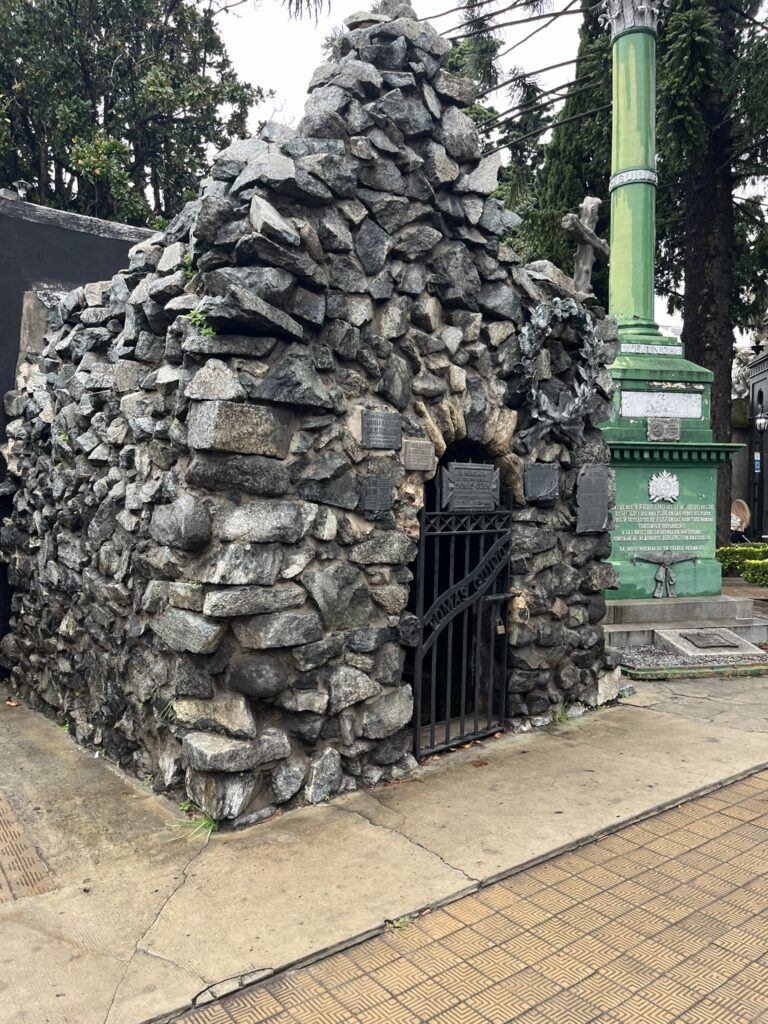
The cemetery itself is unlike any I’ve visited in the United States, as it truly feels like a city of the dead, laid out with streets. As Recoleta has no graves but is full of mausoleums, you get the sense that there are various neighborhoods, some of which are better maintained than others. There is a wide variety of architecture within the cemetery, ranging from classical Greek-looking structures to others that look like ramshackle apartment buildings for coffins. My favorite is General Tomas Guido’s Mausoleum, which is built of stones carried by his son from the Andes mountains as a way to fulfill the General’s wish to be buried in the Andes mountains. Ironically, although the grotto-style crypt remains in Recoleta, the General’s body was relocated in 1966 to the Buenos Aires Metropolitan Cemetery.
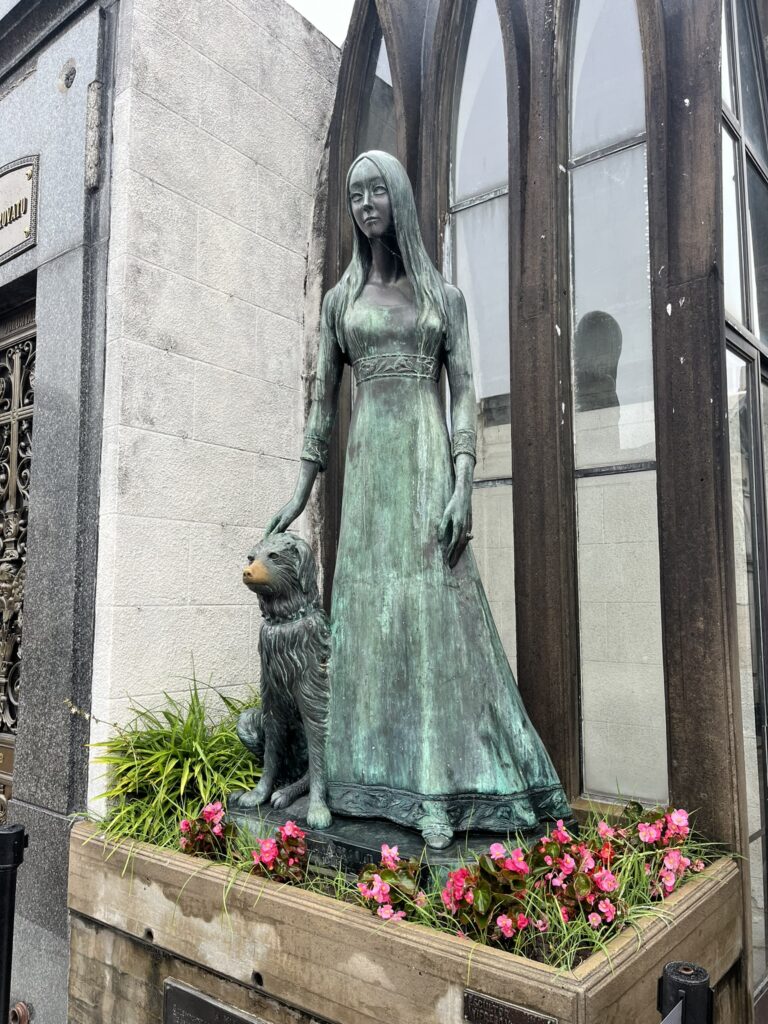
Recoleta is full of tombs and stories. These include the story of Liliana Crociati de Szaszac, who died on her honeymoon in Austria in 1970. Her parents commissioned a Neo-Gothic crypt to hold her remains, and in front of the crypt is a life-sized statue of Liliana wearing her wedding dress and her dog Sabu. The glass mausoleum recreates her childhood bedroom and includes an oil portrait of her. Local legend holds that it is good luck to rub Sabu’s nose. Another story from the tombs of Recoleta is that of David Alleno, a groundskeeper at the cemetery. He saved until he could purchase a small mausoleum and commission a statue of himself from Italy. Local legend says that as soon as his statue was finished, he died by suicide. However, historical records do not align with this myth.
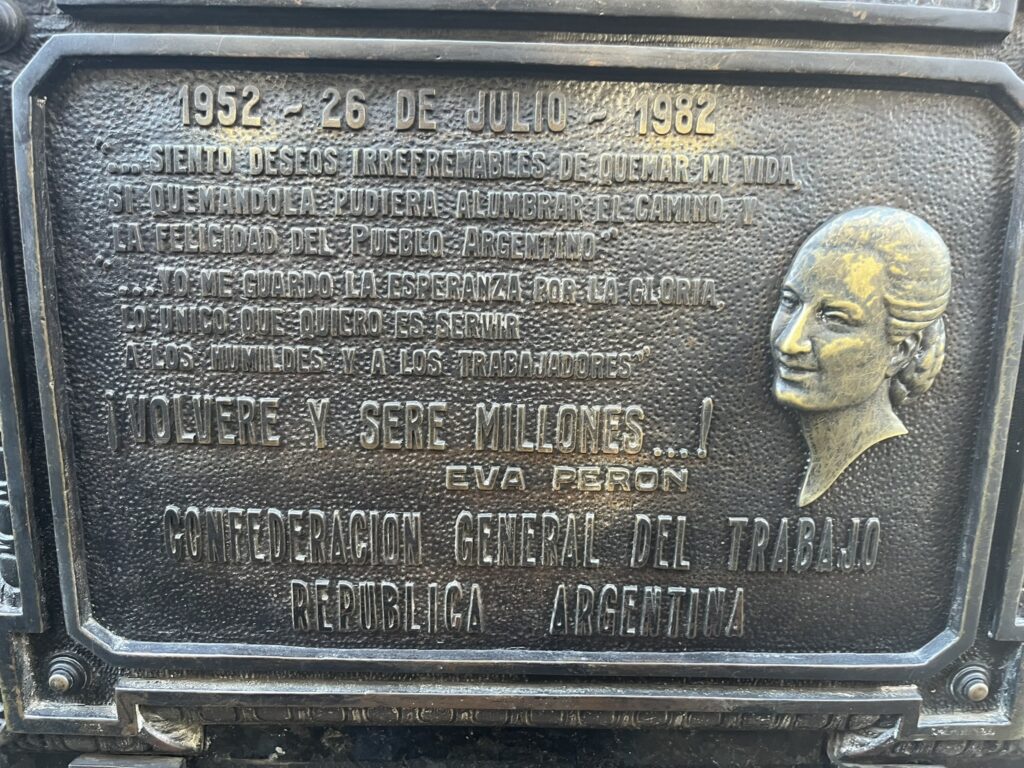
The Internet is full of information about Recoleta, and I have included a few links below. There is also a great book that provides information about some of the most famous graves within this Necropolis. The famous residents of Recoleta include Eva Peron, the former first lady of Argentina, whose body took a circuitous journey before ending up in her family’s mausoleum in Recoleta. Peron died of cervical cancer in 1952 at the age of 33 and was given a funeral fit for a head of state. There are a number of strange tales about what happened to Peron’s body, but what is known for certain is that her body was smuggled out of Argentina and buried in Milan, where it stayed for a while. It was eventually returned to Argentina, where it was buried 25 feet deep in her family’s crypt. Even today, there are usually fresh flowers left on Peron’s grave, and it is a must-see stop on tours of the cemetery.
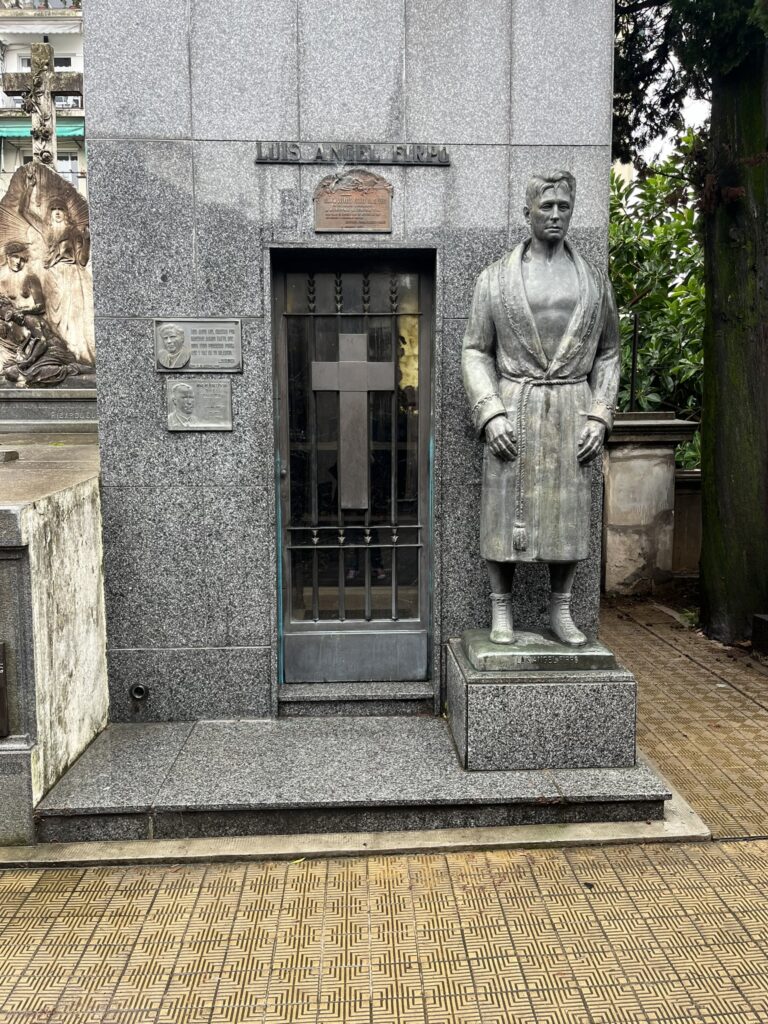
Walking the streets of Recoleta is an experience as you will see mausoleums that are well cared for and full of fresh flowers and others where the crypts are sagging and broken. There are also some, sadly, where the coffins themselves are broken open and the contents are visible. The streets of Recoleta are also filled with statues of the deceased, both famous and obscure. On my first visit to Recoleta, I chose to just wander the streets and alleyways. I took pictures of the crypts that intrigued me and then googled their occupants. That is how I learned that the statue I thought was of a weird man wearing his bathrobe was actually the famous boxer Luis Angel Firpo, the Wild Bull of the Pampas.
A week later I was treated to a private guided tour of Recoleta by a coworker who walked us through the streets and told us tales about Recoleta’s residents and resident ghosts. I learned more about David Alleno and Liliana and about the Lady in White, a ghost who has been seen in the streets of Recoleta. She is variously thought to be Luz Maria or Rufina Cambacares, who was accidentally buried alive.
If you are lucky to visit Buenos Aires, Recoleta is well worth a visit. It will take you several hours to do it justice and wear comfortable shoes. The links below provide additional information.
Interesting Links about Recoleta
A Highlight of Buenos Aires: The Recoleta Cemetery–This article provides a deeper overview of Recoleta Cemetery and a lot of interesting information.
Cemetery Guide: Recoleta Cemetery–Contains practical information about the cemetery, including ways to find particular graves.
Frommer’s Recoleta Cemetery–Another article full of information about the cemetery.